

Trusted EV Charger Installers in Chattanooga, TN
CERTIFIED LEVEL 2 CHARGER & 240-VOLT CIRCUIT INSTALLATION
CHARGE AT HOME, OVERNIGHT, EVERY NIGHT IN CHATTANOOGA
A home charger changes how owning an electric vehicle actually feels: you leave every morning with a full battery and stop planning your week around charging stops. At Metro Plumbing, Heating & Air, we install Level 2 chargers throughout Chattanooga, TN, properly circuited and properly protected.
The charger itself is the simple part. The real question is whether your electrical panel has the capacity and the space for a large new circuit, which is where most home charger projects actually get decided. We assess that first, and we can handle any panel work required rather than sending you elsewhere.
Capacity Checked First
We calculate whether your service can carry the charger before quoting the job.
Certified Electrical Specialists
Dedicated circuits, correct protection, permitted and inspected work.
Transparent, Fair Pricing
A firm written quote covering the circuit, the install and any panel work.
Neat, Considered Installation
Charger sited where your cable actually reaches, with cable runs kept tidy.
Chattanooga’s Trusted Home Service Team Since 1989
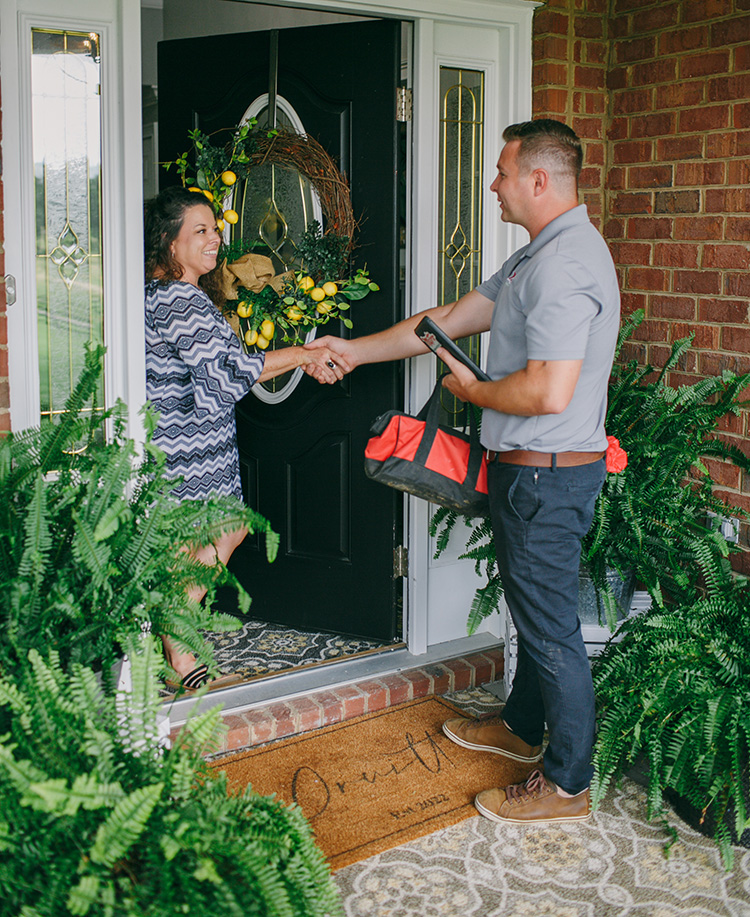
For over three decades, Metro Plumbing, Heating and Air has installed the equipment Chattanooga households depend on daily, and we’ve watched what people actually want from their homes change considerably over that time. Electric vehicles are simply the latest shift. The work behind a good charger installation — load calculation, circuit design, clean routing — is exactly what we’ve always done.


LICENSED EV CHARGER ELECTRICIANS IN CHATTANOOGA, TN
EV Charger Installation Services We Provide
From a straightforward garage installation to a project that needs the panel upgraded first, Metro handles home EV charging across Greater Chattanooga. Where a panel upgrade is part of the work, financing may help spread the cost.
Level 2 Home Charger Installation
Level 2 charging runs at 240 volts and adds meaningfully more range per hour than a standard outlet, which is what makes overnight charging practical. We install wall-mounted units from the major manufacturers, whether you’ve already bought one or want a recommendation.
Dedicated 240-Volt Circuit Installation
Every home charger needs its own dedicated circuit, correctly sized for the unit’s draw and protected appropriately. This is the part of the job that determines whether the installation is safe and reliable, and it’s where cutting corners causes problems that appear months later.
Panel Capacity Assessment
Before anything else, we work out whether your existing service and panel can actually carry a charger alongside your HVAC, water heating and everything else. Sometimes the answer is straightforward. Sometimes it means a panel upgrade, and we’d rather tell you that upfront.
Charger Selection and Placement
Where the unit goes affects how usable it is every single day. Cable length, which side your vehicle’s port is on, how you park, and whether you might add a second vehicle all matter. We’ll walk through this with you before drilling anything.
Garage, Driveway and Outdoor Installations
Not every home has a garage. We install weather-rated chargers on exterior walls, carports and driveways, using outdoor-rated circuits and proper sealing so Tennessee humidity and storms don’t shorten the unit’s life.
Multi-Vehicle and Future-Proofing
Households with two EVs, or one now and another likely later, benefit from planning the circuit and panel capacity once rather than twice. Load-managing systems can also let two chargers share a circuit where full capacity for both isn’t available.
At Metro Plumbing, Heating & Air, we install EV chargers the way the rest of your electrical system deserves: assessed properly, circuited correctly, and finished neatly. Contact us today to discuss home EV charger installation in Chattanooga, TN.
BEFORE YOU BUY A CHARGER
What to Know About Home EV Charging
Level 1 vs Level 2
Level 1 is simply a standard 120-volt outlet. It works, but it adds only a few miles of range per hour, which suits plug-in hybrids and very low mileage. Level 2 runs at 240 volts and recovers far more per hour, turning an overnight stop into a full battery.

Level 3 Isn’t a Home Option
DC fast charging, the kind you see at highway stations, requires industrial-grade electrical service that residential properties simply don’t have. Anyone offering you home Level 3 charging is describing something that isn’t practical or affordable for a house.
Your Panel Decides What’s Possible
A Level 2 charger is one of the largest single loads you can add to a home. Whether yours fits depends on your service capacity, your existing loads, and whether the panel has spare spaces. This is the first thing we check, not the last.
Connector Standards Are Converging
Most manufacturers have now adopted the connector Tesla developed, so cross-compatibility is improving and adapters handle the gaps. The wall unit and the circuit behind it matter far more than the badge on the charger, and a good installation will serve whatever you drive next.
Hardwired or Plug-In
Chargers either hardwire directly or plug into a heavy-duty 240-volt outlet. Hardwiring generally allows higher output and is required for some units; a plug-in setup is easier to replace or take with you. We’ll explain the trade-off for your situation.
Placement Is Worth Thinking About
Charging cables are shorter than people expect and the port isn’t in the same place on every vehicle. Spending a few minutes working out where you actually park, and how you’d park a second car, prevents a daily annoyance you can’t easily fix later.
HOME CHARGING SOLUTIONS FOR EV OWNERS
Get Your EV Charger Installed in Chattanooga Today!
Whether you’ve just ordered your first EV or you’ve been making do with a standard outlet, our electricians will assess your panel, recommend a suitable charger and location, and quote the whole job in writing, including any panel upgrade the installation needs.
Call Us:
(423) 250-9376 – Speak directly with our EV charging specialists.
Request Service Online:
Send us a message and book an assessment in minutes.
Email:
info@metropha.com – Contact us with your EV charger questions or service inquiries.

Frequently Asked Questions
GET ANSWERS TO COMMON QUESTIONS ABOUT EV CHARGERS IN CHATTANOOGA, TN
What's the difference between Level 1 and Level 2 charging?
Level 1 uses a standard 120-volt household outlet and adds only a few miles of range per hour. Level 2 uses a dedicated 240-volt circuit and adds substantially more, typically enough to fully recharge overnight. For anyone driving normal daily distances, Level 2 is the one that makes home charging genuinely useful.
How long does installation take?
A straightforward installation where the panel is close to the parking spot and has spare capacity is usually completed in a day. Longer cable runs, exterior installations, or jobs requiring a panel upgrade take longer. We’ll give you a realistic timeframe when we quote.
Will I need a panel upgrade?
Sometimes. It depends on your service capacity, what else your home runs, and whether the panel has spare spaces. Older homes on lower-amperage service more often need work first. We assess this before quoting so there are no surprises mid-project.
Can I install an EV charger myself?
We’d strongly advise against it. A Level 2 charger needs a dedicated, correctly sized 240-volt circuit with proper protection, and the installation requires a permit and inspection. Errors on a circuit this size don’t stay small, and improper installation can affect both your insurance and your charger’s warranty.
Will a charger work with my Tesla?
Yes. Tesla’s own wall connector can be installed on the circuit we provide, and other Level 2 units work with Tesla vehicles using the appropriate connector or adapter. Most manufacturers have now moved toward a common standard, so compatibility is considerably easier than it was a few years ago.
Should the charger be hardwired or plugged in?
Hardwiring generally supports higher output and some units require it. A plug-in installation using a heavy-duty 240-volt outlet is simpler to swap out or take with you if you move. Both are fine when done correctly, and we’ll recommend based on your unit and setup.
How much will home charging add to my electric bill?
It varies with how far you drive, your vehicle’s efficiency and your rate, but home charging is consistently far cheaper per mile than public fast charging, and cheaper still if your utility offers off-peak rates. Most owners find it costs noticeably less than the fuel it replaced.
Are there tax credits or rebates for home EV chargers?
The federal residential credit for EV charging equipment expired on 30 June 2026 and is no longer available for new installations. Some state and utility programmes still offer incentives, so it’s worth checking with your electricity provider. We’re electricians rather than tax advisors, so please confirm anything financial with a qualified professional.
Can the charger be installed outside?
Yes. Plenty of homes have no garage, and outdoor installation is completely standard. It requires a weather-rated unit, an outdoor-rated circuit, proper sealing at every penetration, and sensible siting so the cable reaches without being stretched across a driveway.
What areas around Chattanooga do you serve for EV charger installation?
Metro Plumbing, Heating & Air serves Chattanooga, TN, and surrounding communities throughout Tennessee and North Georgia. Contact us to confirm availability in your area.
Areas We Serve for EV Charger Installation
We proudly offer expert EV Charger Installation services in the following areas throughout Tennessee and Georgia.
Chickamauga, GA | Lookout Mountain, GA | Rossville, TN | Cleveland, TN | Collegedale, TN | Dalton, GA | East Brainerd, TN | East Ridge, TN | Fort Oglethorpe, GA | Harrison, TN | Hixson, TN | Indian Springs, GA | LaFayette, GA | Lakeview, GA | Ooltewah, TN | Red Bank, TN | Ringgold, GA | Rising Fawn, GA | Rocky Face, GA | Signal Mountain, TN | Tunnel Hill, GA